News Story
Re-discovering the Bach Cello Suites in a Charity Shop? Read on to discover the history of one of the greatest composers of all time, and what to listen for in each of the six suites.
Hear Alisa Weilerstein plays the Cello Suites as part of our Bach to Bach day on Sat 22 Aug 2026.

Written by Joanna Wyld, 2026
Joanna Wyld regularly writes for the BBC Proms, Salzburg and Cambridge Music festivals, the Barbican, Southbank Centre and Wigmore Hall. She has given pre-concert talks at the Queen Elizabeth Hall and Royal Festival Hall, and wrote the libretto to Robert Hugill’s opera The Gardeners.
Bach’s Cello Suites: from Obscurity to Eternity
It seems almost impossible to imagine a world in which the music of JS Bach is anything less than ubiquitous. Firmly established as one of the greatest composers of all time, Bach’s music is so widely performed and broadcast that it has become part of the soundtrack of our lives.
Fickle Fashions
Yet it wasn’t always so. Hard though it is to believe, Bach’s music fell out of fashion for years after his death. His intricate, ornate style was for a while supplanted by music of airy levity – although later 18th-century composers such as Mozart, Haydn and Beethoven were all influenced by Bach’s music, adding greater depth to their works than some of their more lightweight contemporaries.
Charity Shop Treasure
It wasn’t until Felix Mendelssohn led a revival of Bach’s music in the 19th century that it came to greater prominence again. In the case of the Cello Suites BWV 1007-1012, things took even longer.
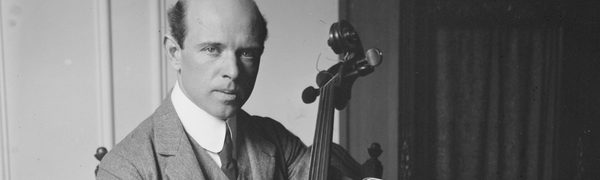
The 20th-century Spanish cellist Pablo Casals reignited the popularity of these pieces thanks to an extraordinary stroke of luck. Casals was just 13 when he was browsing sheet music in a second-hand shop. He happened upon something he’d never seen before, later recalling: ‘I looked at them with wonder: Six Suites for Violoncello Solo. What magic and mystery, I thought, were hidden in those words? I had never heard of the existence of the suites; nobody – not even my teachers – had ever mentioned them to me.’
Casals then practised the works for a full 12 years before mustering the courage to perform them publicly. They became a core part of his recitals; even so, it wasn’t until he was 60 that he felt ready to record the suites.
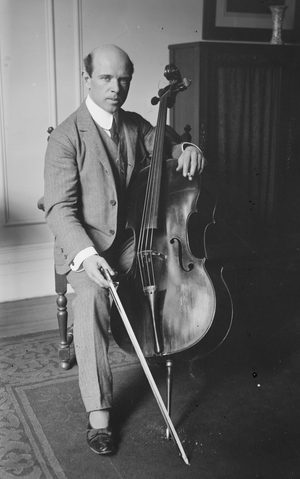
Pablo Casals Unknown date c 1910s 1920s
© WikicommsA Woman’s Handwriting
We might not have Bach’s Cello Suites at all were it not for the dedication of the composer’s second wife, Anna Magdalena, who copied out some of his music. No original score of the suites survives, but thanks to Anna Magdalena we have a good idea of what Bach intended. It seems likely they were written alongside his Violin Sonatas and Partitas in around 1717-1723, when he worked at the court of Prince Leopold of Anhalt-Cöthen.

Excerpt from BWV 210 O angenehme Melodei Johann Sebastian Bach with notation by Anna Magdalena Bach
© WikicommsDance Music
It is unusual to hear all six of Bach’s Cello Suites in sequence, but many believe he wrote them with this type of performance in mind. Bach used popular dance styles in his Cello Suites, including ‘standard’ suite dances: allemande, courante, sarabande and gigue.
Listen out for the differences between each one: allemandes usually have four beats in a bar, anticipated by an upbeat. French courantes are slow and stately, although Bach’s courantes are more similar to the livelier Italian corrente. Slow sarabandes have three beats in a bar, and the energetic gigue – jig – needs no introduction. Bach also uses additional suite movements in the Cello Suites, including lively bourrées, gavottes (which start half-way through the bar) and elegant minuets.
The Suites – what to listen out for
The Suite No.1 opens with a famous prelude in which the cello articulates a captivating harmonic progression. The allemande perpetuates its sense of optimism, followed by an infectiously good-humoured courante. The sarabande and first minuet allude to the first three notes of both prelude and allemande, and the work culminates in an unbuttoned gigue.
The Suite No.2 is tragic yet defiant, the prelude plunging into a sorrowful recurring idea. This drama is sustained in a vigorous allemande, biting courante, and the desolate, timeless open fifths of the sarabande. The minuets make considerable demands of the soloist with complex string crossings and chordal progressions, while the gigue combines quick runs and angular leaps.
The Suite No.3 starts with a heroic, hopeful prelude of intricate textures. The allemande is unusual for its upbeat consisting of three shorter notes rather than the usual single note. After a sinewy courante, the sarabande, a profound soliloquy, features triple and quadruple stopping (three or four notes played at once). The sunny temperament of the first bourrée recalls the prelude, and the suite ends with an earthy gigue.
The Suite No.4 is in E-flat major, a demanding key for the cello, resulting in wide left-hand stretches. Its expansive nature is established in the prelude. After the elaborate allemande comes a hearty courante, and a sarabande in which the cello plays both melody and harmonic accompaniment. The outer sections of the bourrées are marked by a five-note rhythm used in a kind of call-and-response, after which comes a richly textured gigue.
The Suite No.5 starts with a prelude in the form of a French overture: a soul-searching slow section followed by a quicker, fiendishly complex fugal section. An introspective allemande follows, and after a stately courante comes a single-line sarabande of extraordinary depth. Bach took the gavottes to their emotional limits: the first is tumultuous and harmonically wide-ranging, answered by the ghostly, mercurial second. The suite ends with a restrained gigue punctuated by meaningful pauses.
The Suite No.6 is all pastoral charm, starting with a genial prelude, spacious allemande and vivacious courante. There is a rich sarabande and a pair of gavottes combining melody with widely-spaced chords over a ground (repeating) bass. The ambitious gigue uses two parts in dialogue to propel the suite – and the whole set of six – towards a glorious conclusion.
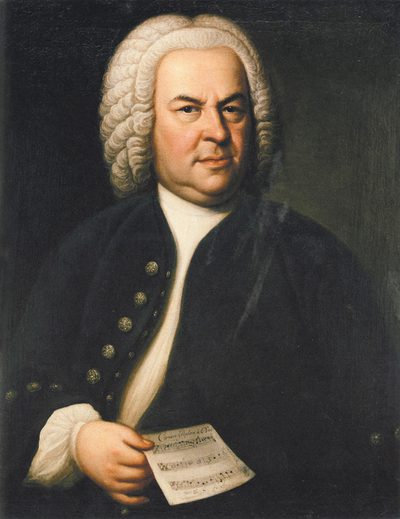
Johann Sebastian Bach aged 61 in a portrait by Elias Gottlob Haussmann the second version of his 1746 canvas Bach is holding a copy of the six part canon BWV 1076
© WikicommsHear Alisa Weilerstein plays the Cello Suites as part of our Bach to Bach day on Sat 22 Aug 2026.