Frequently Asked Questions
Booking InformationFrequently Asked Questions
On this page you can find FAQs for:
Frequently Asked Questions: Booking Tickets
Here are the answers to some of our most frequently asked questions about booking your Festival tickets.
Q: How do I receive my tickets?
A: There are four ways to access your ticket:
- Email: Your tickets will be emailed as PDF documents after you make your purchase. You can display the PDF ticket on your mobile for entry – no need to print.
- SMS: The tickets will be sent via SMS on the day before your event. Ensure your account has your current mobile number to receive the SMS.
- Mobile Wallet: You will receive a link to add your tickets to Google or Apple Wallet in your order confirmation email. You can also add tickets to your mobile wallet anytime via your account.
- Post: If you opt to have your tickets sent to you by post, please make sure you take them with you to the performance. There is a £3 postal charge to receive your tickets via post.
If you need help with anything that isn’t covered here, please get in touch.
Q: I have access requirements, how can you help?
A: You can find out all about our access provisions on our Access page. If you need any assistance at any of our venues, please speak to a member of staff. More Access FAQs can be found below on this page.
Q: Are ticket prices likely to change?
A: From March 2026, ticket prices can go up or down incrementally after they go on public sale, based on demand.
We offer a range of prices to suit different budgets. When some people are willing to pay more for premium tickets—especially for in-demand shows—it directly helps us offer more affordable options for others. We're committed to making the Festival accessible, which is why:
- More than 50,000 seats will be £30 or less
- Every single performance has £10 tickets available for those that need them
- We offer a range of generous discounts on our full-price tickets. Deaf, disabled and neurodivergent people and under 18s can save 50%, and we offer a 30% discount for arts workers and under 30s
- We also offer a 10% discount for groups of 10 or more people
- Free tickets are available to essential companions, young musicians and singers, NHS workers, low-income benefit recipients and charity workers
Q: Do you provide content guidance or highlight sensitive content?
A: We offer content guidance to help you decide whether a performance is suitable for you and your party to attend. We aim to do this without sensationalising or giving away important plot twists or surprises.
Content guidance includes health-based warnings (like strobe lighting) and information about sensitive subject matter that might be depicted or referenced. We strive to keep our guidance clear and straightforward.
Keep in mind that as productions evolve through rehearsals and previews, the content guidance may change between booking your ticket and seeing the performance. This is particularly common when we are presenting the world premiere of a new production.
Content guidance will be updated on each event listing on our website. We also include content guidance in pre-show emails and display it at our venues. Feel free to ask a member of our front of house team at the venue for further details.
Q: How do I see which performances have low or no availability?
A: If the event button is grey and reads ‘No Availability’, there are no seats currently available. If the button reads ‘Access Seats Only’ then the only seats left are for audience members with accessible seat requirements (e.g. wheelchair users)


Q: How can I find out if / when more tickets will be released?
A: We describe events as ‘tickets unavailable’ rather than ‘sold out’ because we do hold certain tickets off sale for several reasons, for example allocations for our Access Pass and Young Musicians Pass members, guests of the performing artists, press, supporters, or invited community groups. If these are not all required, tickets will be released for sale closer to the performance dates. Check back on our website or sign up to our mailing list to be the first to know.
Q: How do I find the £10 Give It a Go tickets and what does it look like when these aren't available?
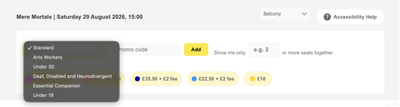
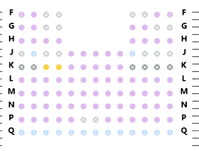
A: £10 Give it a Go Tickets are available to anyone who might benefit from them – an opportunity to try something new, for less. £10 tickets are yellow on the seat map. Navigate to ‘Standard’ on the drop-down menu and click the yellow £10 to view the seats.
If there are no seats remaining, the yellow £10 will be greyed out and unclickable. For some events, more £10 tickets will be released closer to the performance date so it’s worth checking back.
Q: How do I use the favourites feature?
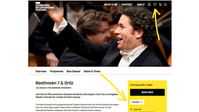
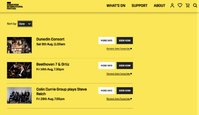
A: Press the heart button under the event button. Once ‘favourited’ the heart will appear filled in. Find all your favourites on the top right of your screen
Q: How do I select concession prices?
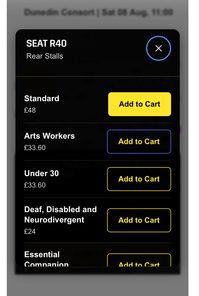
A: On mobile devices, when you select your seat, a box will pop up showing ticket types and concession options.
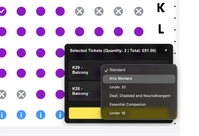
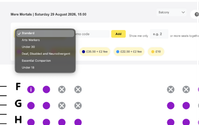
A: On desktop, you can find this information on the top left of the seatmap. You can also select concession prices in the ‘Selected Tickets’ box on the bottom right of the seatmap. You may have to scroll down your page to find it. Click the drop down on your selected seat to see the different concessions available.
Q: How do I adjust ticket numbers within the seatmaps?
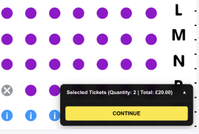
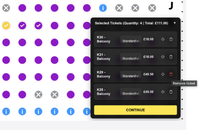
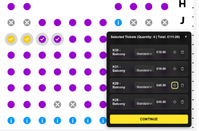
A: Locate the ‘Selected Tickets’ box on the bottom right of the seatmap (you may have to scroll down your page to find it). Click the circle to navigate to your current seats and add more seats next to yours. If you want to remove seats, click the rubbish bin.
Q: How do I book accessible seats?
A: Register your access requirements with us by signing up to our free Access Pass. This allows you to book online for a range of accessible seating options, such as wheelchair user spaces, seats with additional legroom, and seats with good views of a BSL interpreter or captions.
Frequently Asked Questions: Event Information
If you need help with anything that isn’t covered here, please get in touch.
What time should I arrive?
We recommend arriving no later than 15 minutes before the performance starts. Arrive in plenty of time to take your seat, purchase any refreshments you might like and buy a programme, if there is one. Please note that Edinburgh is very busy during August and this can affect travel time, so allow longer than usual to get to your venue.
What happens if I’m late?
Some performances have a no latecomers policy, so you may not be able to enter if you do not arrive in time. If possible, our Front of House staff will ask you to wait in the foyer until a suitable pause in the action before letting you into the performance. Some of our venues have screens in the Front of House spaces, so you may be able to watch the performance on one of them.
Do you provide content guidance or highlight sensitive content?
We offer content guidance to help you decide what to attend, and who to take with you. We aim to do this without sensationalising or giving away important plot twists or surprises.
Content guidance includes health-based warnings (like strobe lighting) and information about sensitive subject matter that might be depicted or referenced. We strive to keep our guidance clear and straightforward.
Keep in mind that as productions evolve through rehearsals and previews, the content guidance may change between booking your ticket and seeing the performance. This is particularly common when we are presenting the world premiere of a new production.
You can find content guidance on each event listing. We also include content guidance in pre-show emails and display it at our venues. Feel free to ask a member of our front of house team at the venue for further details.
Can I use my phone at Edinburgh International Festival performances?
We ask audiences to switch their phones off for the performance itself. You're welcome to take photos or share on social media before the performance, during the interval, and at the curtain call – just not during the performance. If you're unsure how to fully silence or switch off your phone, a member of staff will be happy to help.
Some audience members may need to use their phones for medical or access reasons. Please be kind and considerate to all.
Find out more about our Light Down, Phones Off campaign.
What food and drink options are available?
Each of our venues has a different food and drink offering. Find out all about food and drink on our venues pages.
Is there a dress code?
There is no formal dress code for the International Festival. We want everyone to feel comfortable and able to enjoy the performance. Wear whatever makes you feel best.
Can I bring my children?
We love welcoming younger audiences. Audience members under 16 will need to be accompanied by a responsible adult. Each of our venues has their own age guidance, so please check our venues pages for specific information. Some shows may have specific age guidance and content warnings which can be found on the performance web page and on your tickets.
Do you provide age guidance?
We don’t tend to provide age recommendations unless a show is designed for a specific age group. Our event descriptions and content guidance should help you decide whether a performance is suitable. We offer content guidance to help you decide what to attend, and who to take with you. We aim to do this without sensationalising or giving away important plot twists or surprises.
You can find content guidance on each event listing.
Wondering when to clap for classical music performances?
Longer pieces of music are often divided into movements and there may be a pause between each one. Most people save their applause for the end of a full work, rather than between each movement.
Frequently Asked Questions: Access
What is audio description at a live performance?
Audio description provides a live commentary of what's happening visually on stage - how characters move, important actions not spoken in dialogue - delivered through a personal headset by a trained describer. Around 15 minutes before the performance, the describer gives an introduction covering the set and costumes. Some performances also offer a touch tour beforehand, where you can handle props or costumes to build a richer sense of the production.
What is a relaxed performance?
A relaxed performance adapts the usual rules of live performance, to ‘relax’ the formal aspects, and create a more welcoming environment for people who may otherwise face barriers. This might mean keeping house lights on low, allowing people to speak or move during the show, reducing sudden loud sounds or bright lighting, and providing a quiet space in the venue. There are two main types of relaxed performances, for neurodivergent people and those living with dementia. Every relaxed performance is different however, so check the event listing for the specific features of each one.
What does BSL interpreted mean at a theatre or concert?
A BSL interpreted performance includes a British Sign Language interpreter alongside the performers. This is either integrated (the interpreter performs on stage, sometimes in costume) or side-of-stage (positioned separately but in clear view). At interpreted concerts, musical interpretation is used - conveying the speed, pitch and emotion of the music through gesture, movement and expression.
What is captioning at a live arts event?
Captions display a performer's spoken or sung words, and any important sound effects, as text during the performance, usually on screens either side of the stage. For scripted performances like plays, captions appear in real time and include speaker identification and sound effect cues. For unscripted events like talks, captions are generated live and may occasionally lag slightly or contain misspellings. Surtitles work similarly but provide English translations of non-English performances.
How do I attend an Edinburgh International Festival event as a wheelchair user?
All International Festival venues have wheelchair spaces that can be booked in advance. Signing up for the free Access Pass means accessible seating - including wheelchair spaces - is held exclusively for you until three days before an event. All main Festival venues have step-free or lift access, accessible toilets, and staff available to assist on the day.
Getting to venues: accessible parking bays are available near most venues (some require advance booking - check the venue page before travelling). Lothian Road, near Usher Hall and the Lyceum, has a taxi rank and strong public transport links. If you're attending an event at The Hub, a free shuttle service runs from the bottom of Johnston Terrace during the Festival, accessible for wheelchair users and those using mobility aids.
Full venue-by-venue accessibility details - including parking, transport links, lift specifications and toilet facilities - are in the Access Guide, available to download at eif.co.uk/access or in large print, plain text and braille on request, and on the venue pages on the website. For specific questions, contact the access team at [email protected] or call +44 (0)131 473 2056.
What should I ask a venue about accessibility before booking tickets for the Edinburgh International Festival?
A few things are worth checking in advance, depending on your needs:
Wheelchair spaces and transfer seating - locations vary by venue and there are limited numbers. The Access Guide and website venue pages list these for every venue, and the access team can advise on the best seats for your needs.
Auditorium access – all of the venues we use have step-free access into the auditorium but for some venues this is limited to certain parts of the auditorium. Additionally, some venues have quite a steep incline between rows and may not be suitable for people with mobility requirements or a fear of heights. Please check the Access Guide or website venue page for full details.
Hearing loops and audio systems - most International Festival venues have infrared or induction loop systems, but coverage varies by seat. Check the venue page or contact the box office for guidance on the best seats for reception.
Accessible toilets - all Festival venues have accessible toilets; some have Changing Places facilities (King's Theatre). Locations are listed in the Access Guide and website venue page.
Accessible parking - some venues have bays that require advance booking (Festival Theatre and Church Hill Theatre). Details are in the Access Guide and website venue page.
Audio Description information – the location of where to collect headsets varies depending on the venue, please check with venue staff upon arrival. Seats with the best signal for the headsets is noted in the Access Guide and on website venue pages.
BSL and captioning sightlines - the positioning of screens and interpreters varies. The Access Guide and website venue pages notes which seats have good sightlines, and the box office can advise further.
The Edinburgh International Festival Access Guide covers all of this for every venue and is available at eif.co.uk/access. You can also contact the access team directly at [email protected] or +44 (0)131 473 2056.
What access support does the Edinburgh International Festival offer for disabled audiences?
Edinburgh International Festival offer a range support for Deaf, disabled and neurodivergent audiences. This includes:
The Access Pass – a free membership for people with access requirements, where members can add their specific access requirements into a secure online system meaning they do not need to repeat them each time they book a ticket. There are also accessible seats held exclusively for Access Pass members across every performance, including seats with good sightlines of BSL or captions, seats with additional legroom and aisle seats. You do not need to provide any evidence when applying to the Access Pass.
The Access Guide – a publication providing access information about all of the Festival venues, such as: where the nearest accessible parking bays are, if there is a hearing loop available, information about lifts and stairs. The guide also contains listings of all audio described, BSL interpreted, captioned, surtitled, non-verbal and relaxed performances, this includes the names of the access provider. The Access guide is available in large print, plain text and braille printed formats, or as a digital download from the website.
Accessible Performances – across the Festival programme of music, theatre, dance, and opera, we offer a range of audio described, BSL interpreted, captioned and relaxed performances.
What is the Edinburgh International Festival Access Pass?
The Access Pass – a free membership for people with access requirements, where members can add their specific access requirements into a secure online system meaning they do not need to repeat them each time they book a ticket. If your access requirements are relevant for evacuation procedures, this information is also passed onto our Festival venues.
There are accessible seats held exclusively for Access Pass members across every performance, including seats with good sightlines of BSL or captions, seats with additional legroom and aisle seats. You do not need to provide any evidence when applying to the Access Pass.
Does the Edinburgh International Festival have relaxed performances?
The Festival offers a range of relaxed performances, these are for people living with Dementia or neurodivergent people. Detailed information about the specifics of a relaxed performance can be found on the event page or in the Access Guide.
Full listings of available relaxed performances.
Are there BSL-interpreted or captioned performances at the Edinburgh International Festival?
The Festival offers a range of BSL interpreted and captioned performances, across our programme of theatre, dance, opera and music.
Full listings of BSL interpreted performances.
Full listings of captioned performances.
Information about surtitled performances and non-verbal performances which may be of interest to Deaf and hard of hearing people, can also be found in the Access Guide.
What is audio description at a live performance?
Audio described performances provide a live commentary of what’s happening visually on stage. This might include how a character moves – whether they walk, run, stomp or tiptoe as well as important visual details that aren't spoken in the script, such as a character hiding an object in a particular place.
The commentary is delivered by a trained audio describer who watches the performance live, ensuring the timing of the description matches the action on stage.
Audio describers are skilled at speaking between moments of important dialogue on stage, so you won’t miss any key parts of the performance while using the service.
Around 15 minutes before each audio described Festival performance begins, the audio describer will also provide introductory information, such as a description of the set and what some of the main characters are wearing.
You can listen to the audio description through a personal headset, available to borrow directly from the venue. The collection point varies by location; you can find this information on our website or by asking a member of venue staff.
For some audio described performances, a touch tour facilitated by the audio describer, is also available. These take place roughly an hour before the show and offer additional visual context about the set, props or costumes. You may also have the chance to touch and feel certain items to help create a more vivid understanding of the production.
What is a relaxed performance?
The two main types of relaxed performance we programme are for neurodivergent people and for people experiencing dementia.
The term "relaxed" refers to having a relaxed attitude to some of the more formal aspects of traditional performance; this could relate to aspects of the production or to a person's experience within the venue.
We do this to create an atmosphere and environment that is inclusive and welcoming for people who may otherwise experience barriers when attending live performance.
Some ways a performance may be relaxed include: keeping the house lights on low, to more easily allow people to leave and re-enter; allowing people to speak or make noise throughout the performance, if it helps them remain calm and comfortable; reducing or highlighting moments of high volume or bright lighting; providing a more considered front of house experience, such as having a quiet space available.
It is important to note however that every relaxed performance is different, so please check an event listing to understand the relaxed features specific to that performance.
What does BSL interpreted mean at a theatre or concert?
Our British Sign Language (BSL) interpreted performances, take place in two main formats: integrated or side-of-stage.
In an integrated interpretation, the interpreter performs on stage alongside the performers, often moving with them and sometimes even wearing costume. This can offer a rich experience for audiences, but it is only possible when the interpreter can be fully rehearsed into the production.
A side-of-stage interpretation places the interpreter to the side of the action, in clear view of the audience but separate from the main staging.
We also offer interpreted concerts. These may include BSL interpretation if the music has sung lyrics, and they also use musical interpretation, a technique where the interpreter conveys the speed, pitch and emotion of the music through gestures, movement and facial expression.
What is captioning at a live arts event?
Captions allow performers spoken or sung words to be displayed as written text during a performance.
There are two main types of captioning: scripted and unscripted.
For scripted performances, such as plays - the exact text of the performance is shown in real time as it’s spoken. Scripted captions also include information about who is speaking, along with important sound effects or musical cues.
Surtitled performances work in a very similar way. When a scripted event is not performed in English, surtitles provide an English translation of the text, but they do not include additional information about sound effects.
For unscripted performances such as Q&As or talks, captions are generated in real time. Because they are created live, it’s normal for the text to appear slightly behind the speaker or for occasional misspellings to occur, especially if someone is speaking quickly or using unusual terminology.
In most cases, captions are displayed on large screens positioned on either side of the stage. However, depending on the technical requirements of each production, these screens may sometimes need to be placed elsewhere.
Frequently Asked Questions: Discovery & Participation
What events does the Edinburgh International Festival offer for families in Edinburgh?
During the 2026 Festival, Art of Listening workshops will take place on 15, 22 and 29 August at Space @ The Broomhouse Hub, as part of our Community Connections Hub residency. The August Art of Listening workshops present a shared opportunity for children between 7-11 years old and their grown-ups to explore classical music and encounter live music together. Tickets are free to residents in EH11 postcodes. Find out more about family events at the 2026 International Festival.
I am a young musician currently studying at secondary school in Edinburgh, how can I be involved in shaping the future of the festival?
Our Youth Collective, a group of 15–18-year-old student musicians and creatives, meet regularly throughout the year to learn more about the management of the Edinburgh International Festival, and act as a youth voice for team to work alongside in cocreation.
The annual Youth Takeover Day, happening on the 26 August 2026 and the Youth Collective are advertised directly to music and drama teachers who help us recruit passionate and talented individuals to join the Collective, so keep an eye out for our recruitment drives in June and September/October!
Teachers can sign up to be notified via [email protected]
How can I meet and chat with artists at the Edinburgh International Festival?
If you are between the ages of 8-18, live in Scotland and play an instrument or sing you are eligible for our Youth Musician's Pass.
This lets you see events in the festival for free and access exclusive events such as rehearsals of sold out shows and upcoming meet and greet activities. In previous years of the festival we have offered meet and greets with artists such as Colin Currie, Aga Khan, Hanni Liang and the Fibonacci Quartet. Membership is completely free. Sign up and learn more about the programme.
Can Edinburgh school pupils attend the International Festival for free?
Yes, if you are between the ages of 8-18, live in Scotland and play an instrument or sing you are eligible for our Youth Musician's Pass. Tickets are available from May until the end of June each year. Find out more.
Do you run activities for young people outside of the festival?
We have all year-round projects for ages 8-18 such as the Art of Listening and the Discover series where we work directly with schools to provide opportunities to learn more about the festival and experience live performances.
How is the Edinburgh International Festival working to increase access to live music and performance?
We are committed to offering 500 free tickets and free transport to communities across Edinburgh. In 2026 we plan to give away 200 tickets to NHS Lothian workers, 100 tickets to Community Connections Hub residents at Broomhouse and 200 tickets to Big Noise partners who work directly to improve lives and strengthen communities through music.
Does the Edinburgh International Festival work with hospitals?
Yes. The NHS Festival Sessions bring live music from Edinburgh International Festival associated artists into healthcare settings across Edinburgh and the wider Lothian area, creating musical encounters for NHS staff, patients and service users during the Festival. Find out more.
What is the Rising Stars programme?
Rising Stars is an annual programme connecting early-career musicians with professional mentors and performance opportunities at the International Festival. Musicians are selected by audition. Discover more.
Frequently Asked Questions: Princes Street Fire
Will the Princes Street fire affect any of the International Festival shows?
No International Festival performances are affected by the fire, and none of our venues have been directly impacted. The closure is affecting general traffic and public transport in the city centre, so we'd encourage all audiences to check transport updates and allow extra time to reach venues throughout August.
Will the road still be closed when the Festival starts?
We understand from the City of Edinburgh Council that Princes Street is likely to remain closed between Frederick Street and South Charlotte Street into August, and we'd encourage our audiences to check transport updates and allow extra time to reach venues throughout August.
How will this affect trams and buses to venues?
Trams are currently unable to run between the city centre and Newhaven, and Lothian Buses have diversions in place via George Street. We'd recommend audiences check the Edinburgh Trams and Lothian Buses websites or apps ahead of travelling, and build in extra time – particularly for evening performances.