News Story
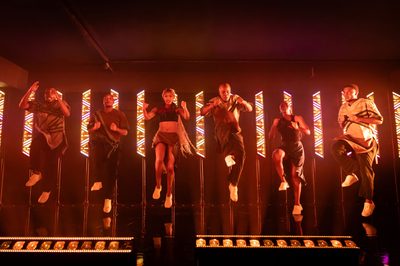
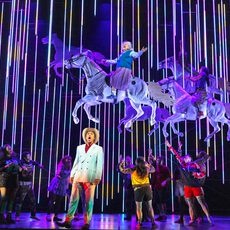
INALA burst to life at the 2014 Edinburgh International Festival with a world premiere that beguiled audiences with its unbridled joy and positivity. Now, as we prepare to welcome the West-End show back to Edinburgh, we take a look back at the piece's origins.

Written by Graham Watts, 2014
Graham Watts is a freelance dance writer and critic who is culture editor of BThere magazine and writes regularly for international magazines and websites. He is Vice-President of the Critics’ Circle, chair of the Dance Section and of the National Dance Awards in the UK. His 2013 book, Agony & Ecstasy, was written with the Czech ballerina Daria Klimentová.
Read time: 3 minutes
The Road to INALA
It was a concert at the Cadogan Hall in 2009 that sparked the idea of creating a Zulu ballet, originally centred on the Ladysmith Black Mambazo choir. Earlier that year, two young women had formed Sisters Grimm as a production company to promote and encourage new music and dance projects: the London-based composer Ella Spira invited her new business partner, Pietra Mello-Pittman, to go and hear the internationally acclaimed South African male choir.

Made with Mambazo in Mind
Having been a dancer with the Royal Ballet since 2002, Mello-Pittman saw potential for the Sisters Grimm to embark on their first major project: ‘I was blown away by the beautiful songs but I couldn’t believe that such a famous, historical group did not have a bigger visual presence’, she explained. ‘
As a dancer at the Royal Ballet, I have been spoilt visually, so throughout the Mambazo concert I kept thinking how amazing it would be to collaborate with this wonderful choir to visualize their music in dance. When I suggested this to Ella, I discovered that it had always been her dream to work with the choir.’
The Sisters Grimm lost no time in getting started. While Spira started composing the music, working alongside Joseph Shabalala, the founder and musical director of Mambazo, Mello-Pittman approached both Deborah Bull (then head of the ROH2 programme at the Royal Opera House) and Dame Monica Mason, the former artistic director of the Royal Ballet, to promote the idea and seek their support.
Bull suggested a contemporary approach and provided a list of potential choreographers, which included Mark Baldwin – then artistic director of Rambert Dance Company – who took on the commission.
Naming INALA
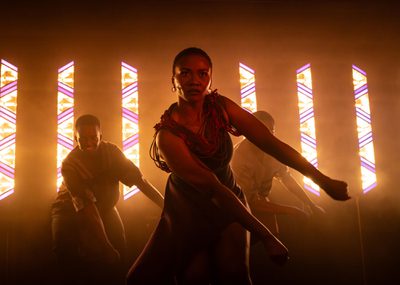
The title INALA came when the Sisters Grimm were on their first trip to South Africa. ‘I saw the word written on a wall and I liked it’, recalled Mello-Pittman, adding, ‘even more so when I discovered that "Inala" has two meanings: one is “harvest to reap”, in the sense of preparation creating reward, and the other is “abundance of goodwill”.
I just loved the word and I thought it was exactly what we needed’. With his indigenous knowledge of the language, Mbulelo Ndabeni - one of INALA's original principal dancers - added that his personal interpretation of the word was ‘unity, in the sense of united we stand, achieving greatness through diversity’.
INALA returns to Edinburgh
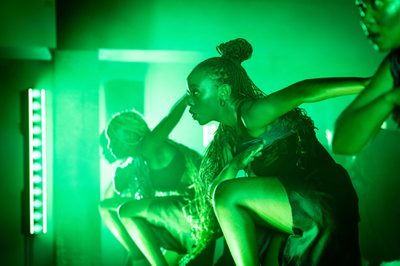
Ndabeni's 2014 interpretation of INALA is a striking echo of this year's Festival theme: All Rise, a rallying cry encompassing collaboration, resilience and ascendance.
More than ten years after its world debut at the Edinburgh International Festival, this "heartwarming antidote to pretty much everything" (Daily Telegraph) returns to Edinburgh from London's West End as a Grammy nominated, internationally touring dance production. Now performed by an exceptional all-South African choir from Soweto, INALA also features narration by Ndaba Mandela, grandson of Nelson Mandela, and stands today as a joyful tribute to the late Joseph Shabalala.