News Story
From Bach's Passions and Duke Ellington's landmark jazz symphony to a protest ballet score, Mel Spencer explores how the act of gathering together to listen has changed over the centuries - but never lost its power.

Written by Mel Spencer
Mel Spencer is a music and arts marketing consultant, writer and founder of Concert Pitch Digital.
Read time: 5-7 minutes
Rethinking “Congregation”: How collective music making can reveal human truths in a secular society
Prayer beyond belief
'When we sing, we pray twice.' Whether or not St. Augustine actually wrote these exact words, this phrase has endured as something of a 'Live, Laugh, Love' mantra for choral musicians, framed and hung in rehearsal rooms to express something fundamental about the relationship between music and belief.
For centuries, singing has been understood not simply as an accompaniment to worship, but as worship itself: a collective act through which faith is expressed and shared. But what happens to that idea when many of us no longer identify with the religious traditions that gave rise to so much of the Western classical canon?
Praying twice, or even at all, isn't something everyone does these days: in the 2022 census, 'No religion' was the largest religion category in Scotland, selected by 51.1% of the population. If we are not praying, what are we doing when we gather to make music together, or indeed, when we gather simply to listen?
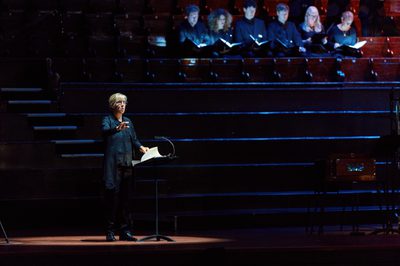
Sofi Jeannin with Edinburgh Festival Chorus
© Andrew PerryAs is so often the case, Bach has an answer.
His St John and St Matthew Passions were written to be performed as part of the Good Friday service, animating the story of Jesus's crucifixion through musical performance. But this wasn't simply a performance for an audience to watch: each of the chorales in the Passions is set to a hymn tune the congregation would have known, inviting everyone into the drama.
Bach alternates between objective narration, where the Evangelist tells us what happened, and the subjective response of the chorales, where everyone in the room shares their collective emotional reaction to what is playing out in front of them.
Regardless of our own personal beliefs, it's almost impossible not to be moved by the human story at the heart of the drama. Even in a modern staged performance, where we are invited to watch rather than sing ourselves, we are bystanders as an innocent man is put to death at the hands of the authorities.
Bach's profound music serves as a meditation on human responsibility, for those with or without faith, as we reflect on the ways we are capable of the same failures we see playing out in front of us.
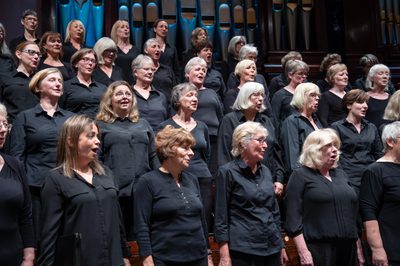
Edinburgh Festival Chorus
© Aly WightThe congregation as witness
This is mirrored more explicitly in other parts of the Festival programme: contemporary composer Joel Thompson also hones in on the Passion narrative, albeit from an entirely modern perspective. His Seven Last Words of the Unarmed is consciously modelled on Christ's Seven Last Words from the Cross, but instead centres the final words of seven Black men before they were killed by authority figures. This piece is performed in This Shining Night by Edinburgh Festival Chorus.
As we congregate as listeners, we become bystanders again, watching as injustice plays out on the stage in front of us. Thompson asks us as audience members to examine our own relationship to systemic racism and violence: how do we become complicit, by staying silent?
As Thompson has explained of the piece: 'I called some people together for the read, people of different races, ethnicities, and backgrounds. And I could feel them all connecting to this struggle that was outside their own. Music provides an opportunity for people to do that… it creates a space for empathy.'
Hope, therefore, is not lost. Thompson himself was keen to emphasise that the purpose of Seven Last Words of the Unarmed is not to leave audiences trapped in guilt, but to create a space where we might gather together and respond collectively. The act of congregating becomes significant because it reminds us that responsibility is not only individual.
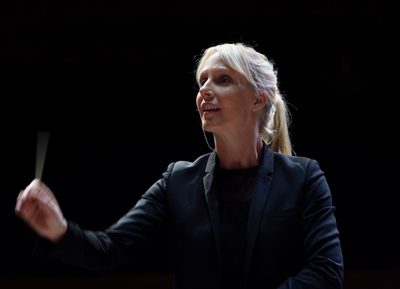
Sofi Jeannin
© Christophe AbramowitzMaking space, taking space
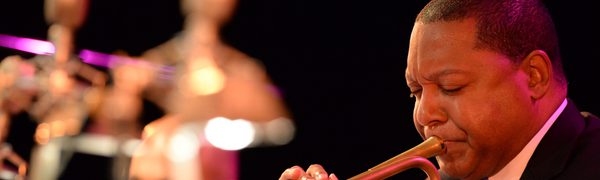
This is the profound social metaphor at the heart of so much ensemble music, and a key theme explored by All Rise composer Wynton Marsalis, who argues that jazz, particularly improvisation, requires individuals to contribute while constantly listening and making space for one another.
Music takes us… into a feeling of community, which is shared responsibility, shared rights and the creation of space for others to be creative and to be a part of the process.Wynton Marsalis
But making space for others isn't the same as everyone getting quieter, particularly in the context of marginalised communities so often denied access to established cultural spaces. When Duke Ellington presented his landmark jazz symphony Black, Brown and Beige at Carnegie Hall in 1943, he made a powerful point about the voices and experiences traditionally heard on the concert platform.
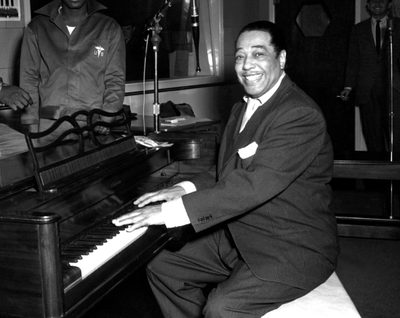
Duke Ellington
© wikimedia commonsThe music aims to share the sounds and stories of the African American experience, weaving jazz, blues, and spiritual influences into a symphonic form – a musical structure dominated by white, European voices over generations. Performing to a racially mixed audience ranging from civil rights activists to mainstream celebrities, Ellington and his band proved a point that jazz, and by association, musicians of colour, had been wrongly denied a place on the concert platform.
Wynton Marsalis and the Jazz at Lincoln Center Orchestra continue to champion this vision of jazz as both a communal art form and a catalyst for dialogue. Congregation, here, is not only about accommodating difference within a community, but about finding recognition and collective strength.
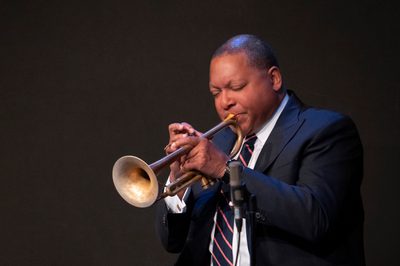
Wynton Marsalis
© Courtesy of ArtistAll Rise: Finding a collective voice
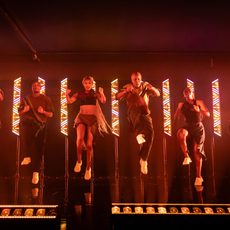
Gabriela Ortiz's 2023 ballet score Revolución diamantinais a musical embodiment of this strength in numbers, where women came together to protest against violence against women and girls in Mexico.
Multiple amplified high voices propel the music forward, ending with a triumphant surge of sound in the final act, 'Todas' (Together). Individual musical lines enter one after the other, each with distinct and sometimes clashing lines, with the choir growing in confidence and power, gradually settling together in an eerie unison, as marginalised individuals discover a power that none could possess alone.
And here, perhaps, there is a parallel with even the most devout of religious congregations: over thousands of years, humanity has come together with the shared belief that transformation, both personal and societal, is possible. Whether in a church, a concert hall, or a shared public space, and across communities of all faiths and none, music continues to be a vehicle for this transformation, offering solace, self-expression, and identity, as we unite as a temporary collective of individuals.
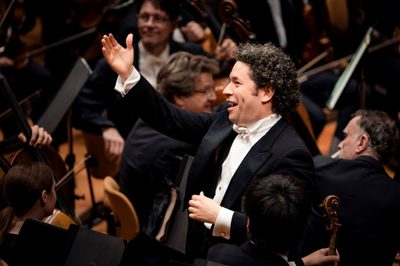
Gustavo Dudamel / LA Phil Residency
© Stephan RaboldSee You There 🎶
Hear Seven Last Words of the Unarmed at This Shining Night on Thu 13 Aug 2026, 9.00pm.
Experience All Rise at Opening Concert: All Rise on Sat 8 Aug 2026, 6.30pm.
Get involved in The Bach Chorales in Come and Sing Bach on Sat 22 Aug 2026, 10.30am.
Hear the LA Phil perform Revolucion Diamantina in Beethoven 7 & Ortiz on Fri 14 Aug 2026, 7.30pm.
Experience Black, Brown & Beige in JLCO plays Duke Ellington on Tue 11 Aug 2026, 7.30pm.