
News Story
Three recitals. Three pianists who have each forged their own distinctive artistic paths.
Hear Steven Osborne (Mon 17 Aug), Paul Lewis (Thu 20 Aug) and Pierre-Laurent Aimard (Wed 26 Aug) perform at The Queen's Hall in tribute to the late, great Alfred Brendel.
Read about Brendel's life below ⬇️

Written by Petr Limonov
Petr Limonov is a Russian-born British pianist and winner of the Nikolai Rubinstein International Piano Competition. A pupil of Maria João Pires and Dmitri Alexeev, he is a sought-after soloist worldwide, with performances including Wigmore Hall, La Roque d'Anthéron and the Edinburgh International Festival.
Read time: 4-5 minutes
Alfred Brendel - In Service of the Music
A towering figure of 20th-century pianism, Alfred Brendel nevertheless stands apart from nearly all of his great contemporaries. His unique approach, which he developed essentially entirely on his own, took him decisively away from the earlier tradition of grand Romantic pianism.
Yet his admiration for figures of the past such as the visionary conductor Wilhelm Furtwängler and the incomparable pianist Edwin Fischer firmly rooted him in a tradition of music-making that can be traced all the way back to Carl Philipp Emanuel Bach – a tradition which prioritises, above all, singing tone and sincerity of emotional expression.
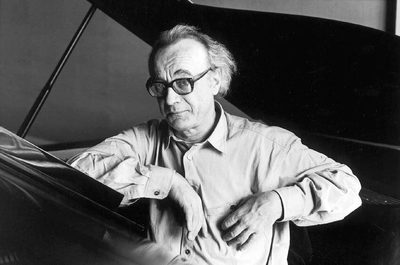
In Brendel’s sound world, this search for true expression exists in constant dialogue with aspects that seemingly occupied him just as much: clarity of structure, a meticulous approach to timing and phrasing, a search for proportion, and for the hidden architecture of the works that formed his repertoire.
Understanding these elements as deeply as almost no one before or after him allowed Brendel to 'sculpt' his recitals – not merely remaining true to his own voice from moment to moment but masterfully building soundscapes full of meaning and wisdom for those fortunate enough to hear him perform live – or encounter his legendary recordings.
Beyond the Piano
Order and chaos, seriousness and humour – Brendel not only embraced these contradictions but consciously explored them throughout his life. Exceptionally well read and deeply knowledgeable about art and philosophy, he accepted these categories almost as axioms, without attempting to deconstruct them in the spirit of the age in which he lived.
This outlook, closely aligned with many 18th-century German philosophers, allowed him to move spiritually closer to the composers for whom he ultimately became most admired: Joseph Haydn, Wolfgang Amadeus Mozart, Ludwig van Beethoven and Franz Schubert. In several interviews, Brendel spoke of his admiration for the aphorisms of Georg Christoph Lichtenberg, and anyone who opens that wonderful little book encounters the same humble clarity of deeply humane thought.
His recordings of Beethoven’s and Schubert’s sonatas never aim to overwhelm the listener with external effects. Instead, Brendel opens a door into both his own world and the composer’s, calmly inviting us into a space where intuition and complex logic coexist in dialectical unity – where not a single detail of the score is overlooked, yet no single detail draws undue attention at the expense of the whole.
Brendel was anything but an entertainer on stage. He did not always agree with being called an ‘intellectual’ pianist, yet he was undoubtedly closer to a philosopher than to the stereotypical virtuoso dazzling audiences with brilliance and sheer technical spectacle. And yet – another seeming paradox of his artistic path – he was a true master of the keyboard who, in his earlier years, championed fiendishly difficult works by Franz Liszt and Modest Mussorgsky. Even then, however, he transcended the purely physical dimension of piano playing, always focusing on architecture, inner logic, and inner drama.
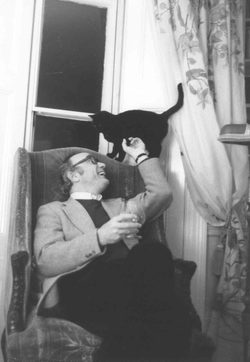
Brendel was not only a pianist, but also a marvellous writer and prolific poet. His writings remain essential reading for anyone who loves music and wishes to discover more about the magical inner world of the artist who captivated audiences throughout his long performing career. He inspired countless younger pianists to be daring, intellectually curious, and faithful both to the spirit and the letter of the music – whether through his pupils, the string quartets he loved coaching, or musicians who absorbed his wisdom through repeated listening to his interpretations of the great composers of the past.
A Fitting Tribute
This year, the Edinburgh International Festival presents A Tribute to Alfred Brendel: three recitals by three pianists who have each forged their own distinctive artistic paths, and whose individuality is as unquestionable as their fidelity to the composers they perform: Steven Osborne, Paul Lewis and Pierre-Laurent Aimard.
Image gallery
A gallery carousel of 3 items
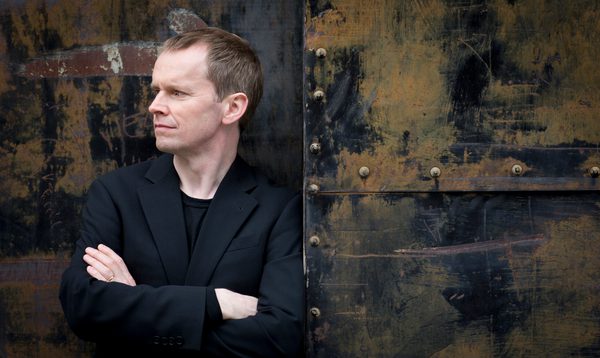
Steven Osborne
© Credit : Ben Ealovega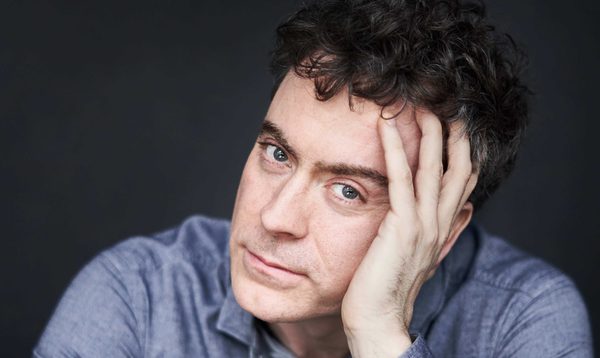
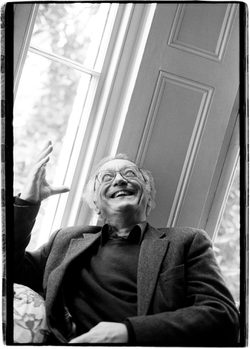
Paul Lewis
© Credit : Kaupo Kikkas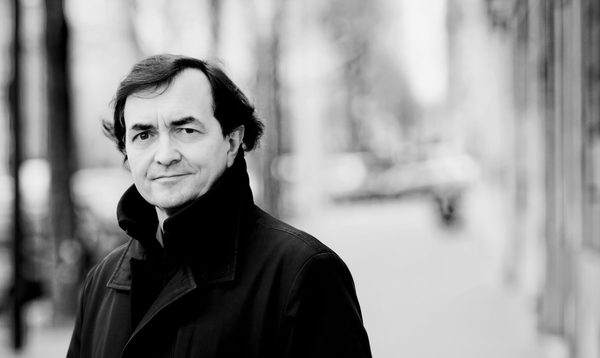
Pierre Laurent Aimard
© Credit : Marco BorggreveDive Deeper
In these concerts we will hear works by Schubert and Beethoven, composers especially close to Brendel’s heart.
However, Paul Lewis will also perform Chopin’s Polonaise, Op. 26 No. 1, and the Two Nocturnes, Op. 32. Brendel admired the music of Frédéric Chopin, yet he also deeply admired Alfred Cortot’s interpretations of it – especially Cortot’s celebrated recording of the 24 Preludes – and humbly stated that he did not wish to add anything to readings already so unique in their own right.
This artistic humility and sincerity were profoundly characteristic of Brendel, and his omission of these works from his own repertoire is as meaningful as their inclusion in the Festival.
The same may be said of the more modern works included in the programmes: pieces by György Kurtág, György Ligeti, James MacMillan and Judith Weir.
Brendel’s interest in contemporary music was enormous – he championed, for example, Arnold Schoenberg’s piano concerto – yet he ultimately chose to focus on more tonal repertoire, while maintaining an insatiable curiosity and encouraging younger musicians to follow their own artistic paths.
Alfred Brendel
© Benjamin EalovegaTribute To Alfred Brendel
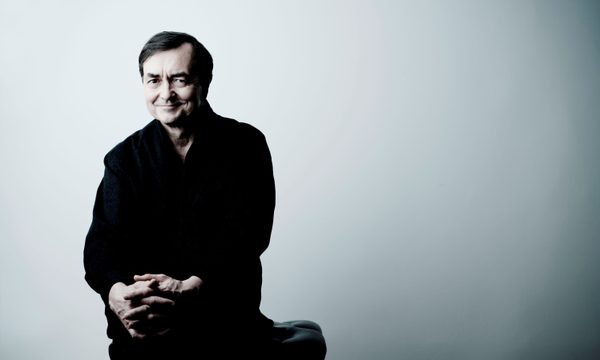
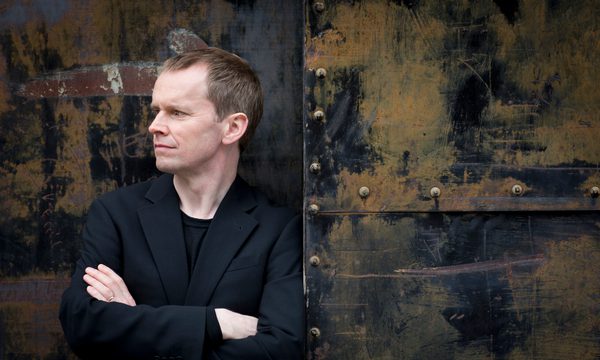
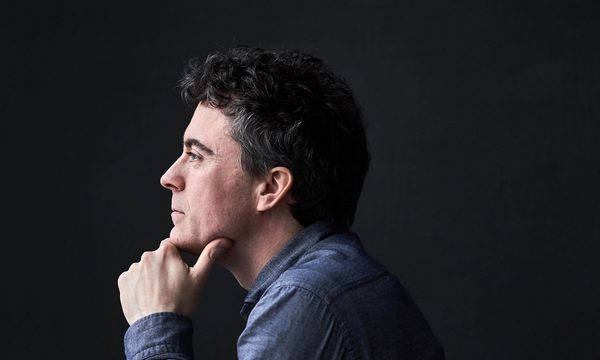




Photo: Alfred Brendel
© Isode Ohlbaum