
News Story
From ancient sounds to contemporary inspiration, artistic director of Scottish Ensemble, Jonathan Morton gives us a glimpse of Brìghde Chaimbeul's incredible sound world.
Scottish Ensemble & Brìghde Chaimbeul perform on Sun 23 Aug 2026, 8.00pm at Edinburgh International Festival.

Brìghde Chaimbeul
© Monika RumanYou're no stranger to the Edinburgh International Festival...
I have very fond memories of performing at the Queen's Hall during the Edinburgh Festival in 2005, in what was my first concert as artistic director of Scottish Ensemble. It was a daunting but also very exciting moment for me. Of course we regularly perform throughout Scotland, but it’s always wonderful to get an opportunity to share our work with a broader international audience.
Scottish Ensemble is known to blur genres and confound expectations through its artist collaborations. What does working with artists like Brìghde Chaimbeul bring?
Different ways of hearing, fresh ideas, new perspectives. A group like Scottish Ensemble is very tight-knit – many of us have played together for many years and this creates a unique team spirit. But I think it's also important to bring in different ideas – it's like having fresh nutrients.
Every time you collaborate with a new artist, the process is different. Brìghde has a uniquely distinctive voice, and she has taken us into new sonic territory. This process of discovery is wonderful. It’s what life's about, really. If you're part of the audience, you're coming to witness and take part in something being created. This can create a wonderful atmosphere in the hall, a kind of heightened sensory experience. I think festivals can be particularly good at generating excitement and anticipation around new work.
How did the collaboration with Brìghde come about?
I hadn’t worked with Brìghde before but I had listened to her recordings. She is a singular artist – I can’t really think of anyone like Brìghde in terms of the way she approaches her instrument and her tradition. In a sense she has reinvented her instrument – who would have thought that there were new ways of using smallpipes?
You would think the sound is so known and so set, but Brìghde comes along and suddenly – there's a whole new universe of amazing possibilities.
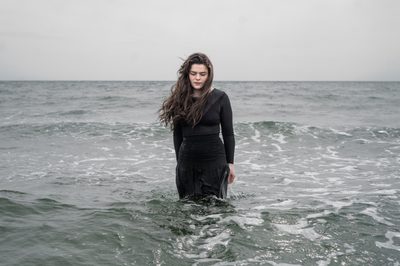
Brìghde Chaimbeul
© Monika RumanHow would you describe this performance to an audience member walking into the Queen's Hall?
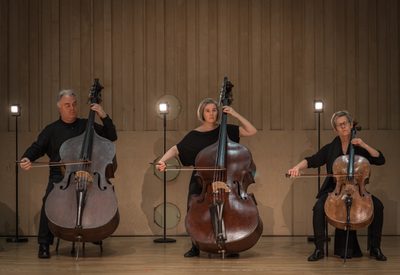
First, I would say that we're very much being invited into Brìghde's sound world. She’s using the strings of the Ensemble’s instruments as a kind of extra resonator for her instrument, expanding that world to create a depth of colour and a spectrum of sound that I would say is rather epic!
What is Scottish Ensemble's approach when it comes to tradition and innovation?
Any tradition can ossify. That's what tends to happen to traditions - over time, they gradually lose their animating spirit. I think all artists have to confront this issue. For me it’s important that new ideas challenge and refresh our own tradition. The creative tension, the conversation between the old and the new is crucial, and it keeps us on our toes. When we play new music we try and be open to its roots, and what they connect to, underneath the surface. I think Brìghde does this extraordinarily well.
What is it about the drone in Brìghde's playing – that constant, unmoving note underneath everything else – that you find so compelling?
The drones are fascinating organisms. Listening to them over a sustained period of time can be a remarkable, strange experience. At first hearing, the overwhelming sense is one of stasis, but soon you can start to hear layers of ethereal, beautiful voices emerging. It’s magical.
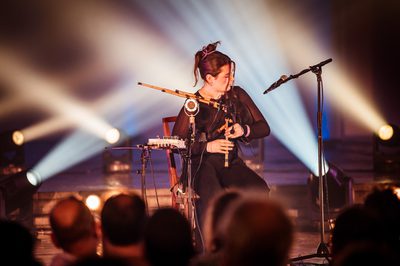
Brìghde Chaimbeul
© Jelmer De HaasThere is something ancient to it...
Absolutely. Drones emerge out of the laws of physics, of sound and nature. I think that's why it feels so elemental. You are basically hearing the building blocks of sound and going deep into that world. It's something composers such as La Monte Young explored in the 1960’s, but to hear an artist coming at it from a completely different angle – from Scottish traditional music – it's just thrilling.
What you would like the audience to experience, or to leave with?
I suppose it's an invitation to let your mind wander via this very rich, earthy, other worldly sound. It's something that might at first feel quite new, but then you start to realise – this is connecting you to something that is very ancient. Your mind starts to open up and, hopefully, you'll hear things that are really very unexpected.
Because the musicians – especially in the resonant acoustics of the Queen's Hall – are going to create a kind of shimmering sound world which I hope will be extraordinary. I don't think many people will be familiar with that kind of experience – it's unfamiliar and yet powerful, visceral, beautiful, and something that opens up your mind to new worlds of sonic possibilities.
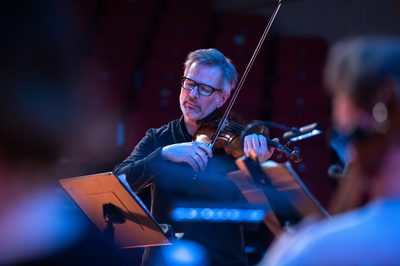
Jonathan Morton
© Tommy Ga Ken Wan