News Story
The Hub becomes a site of cultural exchange in Routes to Roots, a music project featuring the Scottish violinist Catriona Price and Argentinian musicians El Guapo on Thu 27 Aug 2026, 8.00pm at The Hub.
Joni Strugo, Creative Director at Routes to Roots, shares a playlist compiled by the artists featuring in the performance ⬇️

Written by Joni Strugo, Creative Director, Routes to Roots
Routes to Roots is an artlist-led organisation that brings together artists from different cultures to create brand-new music, as well as their own arrangements of traditional tunes.
At Routes to Roots, intercultural collaboration is at the heart of everything we do. We bring artists from different backgrounds, traditions and musical languages together to create something that could not exist without that encounter.
For this performance, artists from Scotland, Argentina, Nigeria and Senegal come together: Catriona Price, Kris Drever, LOHDÓH, Camilla George, members of Orchestra Baobab and El Guapo. We have been developing new collaborations and arrangements between them, some of which will be performed for the first time on this stage.
For us, interculturality is not about simply placing different cultures next to each other. It is about listening, sharing, questioning and allowing each artist to influence the others—creating new musical possibilities through genuine exchange.
This approach is the foundation of our work at Routes to Roots, and feels especially at home within the spirit of the Edinburgh International Festival: bringing artists and audiences together through curiosity, dialogue and the belief that music can create meaningful connections across borders.
Track Breakdown
Storms — Catriona Price
Taken from her 2023 album Hert, Storms is a setting of a poem by the remarkable Margaret Tait. The poem spoke to Catriona Price as soon as she read it. Written in 1959, Margaret uses an Orkney storm as a metaphor for her own strength: “I wished for a storm to test my strength against.”
Tait was a prolific writer and filmmaker—a woman ahead of her time. Her words transport Price right into the middle of an invigorating Orkney gale.
For the track, Price decided to use three-part female vocals in a high register to accompany the wild weather imagery, as if they are screaming into the storm, testing out their strength.

LOHDÓH
© courtesy of the artistVapor — LOHDÓH
LOHDÓH, the duo of Noelia Recalde and Jonatan Szer, inhabit a space where song, sound design and experimentation coexist without one ever overwhelming the other. Their live set is as particular as their music: an aesthetic and sonic world that invites the audience to actually stop and listen—sometimes closely enough to notice the smallest detail.
They can be experimental without losing their groove, sophisticated without losing the song, and meticulously crafted without feeling overly constructed. Their sound design becomes part of the composition itself, rather than simply decoration around it.
Vapor, the opening track of their 2026 EP, is a particularly good example of this balance.
LOHDÓH is music where the soundscape doesn’t sit around the song; it becomes the song.

El Guapo
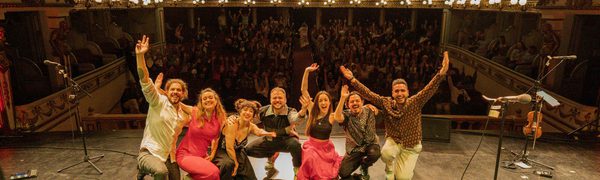
© Fernanda RuizEl Amague — El Guapo
El Amague is a song about resilience: falling down, getting back up, and learning to keep moving when life sends you in the wrong direction.
Its central metaphor comes from football and the Argentine expression “comerse un amague”—to commit to the wrong movement because someone has made you believe they are going somewhere else. Much like life, really.
The song is also part of El Guapo’s travel diary: an Argentine band constantly moving between countries, stages and cultures, discovering that the road rarely follows the plan—and that this is often where the interesting things happen.
There’s a little historical joke hidden in the lyrics, too. The song secretly names the five English players Maradona left behind during his legendary 1986 World Cup goal: Beardsley, Reid, Butcher, Fenwick and Shilton.
Can you find all five names?
I’ll Always Leave the Light On — Kris Drever
I’ll Always Leave the Light On, from Kris Drever’s 2020 album Where the World Is Thin, is written from the perspective of the moon—a distant but caring observer watching the strange, fragile business of human life.
What makes Drever’s music so enjoyable is its sense of space and restraint. Nothing feels crowded or unnecessary. Every sound seems carefully chosen, from the instruments and textures to the way the production leaves room for the voice and guitar to breathe.
The songwriting is equally well curated, both lyrically and instrumentally: thoughtful without being overly serious, melodic without trying too hard.
It’s the kind of song where less really does feel like more—and where a few minutes of simply listening can be surprisingly satisfying.
The People Could Fly — Camilla George
The People Could Fly draws on the African folk tales of slavery and lost powers of flight that Camilla George heard as a child in Nigeria. These stories—of people who once possessed the ability to fly but lost it through slavery—became a powerful part of her imagination.
The track revisits those myths not simply as stories of suffering, but as stories of memory, freedom and the possibility of reclaiming what was taken away.
At its heart, The People Could Fly is about remembering that freedom was once possible—and imagining that it might be possible again.
Orchestra Baobab
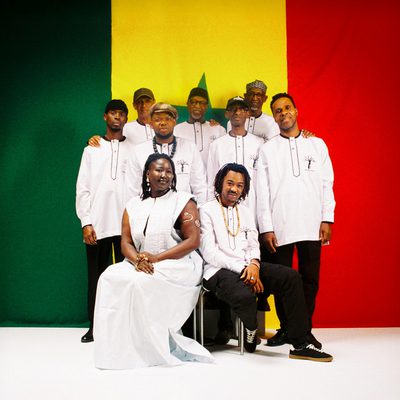
© charlotte SteppéUtrus Horas - Orchestra Baobab
Utrus Horas offers a glimpse into the sound that made Orchestra Baobab so important to Senegalese music. Formed in Dakar in 1970, the band brought together musicians from across West Africa, blending Senegalese traditions with Afro-Cuban rhythms, creating a sound that became synonymous with Dakar’s musical culture.
Recorded in 1982 and later released on Pirates Choice, Utrus Horas captures that distinctive atmosphere: hypnotic guitars, rolling percussion, saxophone and an effortless dance-floor groove.
More than five decades on, Orchestra Baobab remain a powerful symbol of Senegalese musical identity—not because they rejected outside influences, but because they transformed them into something unmistakably their own.