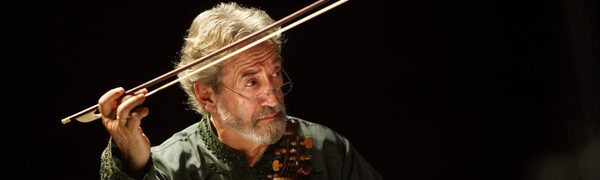
Jordi Savall: A Sea of Music
Jordi Savall: A Sea of Music
Jordi Savall has dedicated decades to the rediscovery and appreciation of early music, and his many accolades now include the 2026 Ernst von Siemens Music Prize (often called the Nobel Prize of Music), recognising a lifetime of outstanding contributions. He returns to the Festival after previous performances with his versatile Hespèrion XXI ensemble.
Hespèrion XXI is known for pioneering interpretations of repertoire from the medieval to the Baroque periods. They join Jordi Savall’s Catalan singers, La Capella Reial de Catalunya, and Mexican trio, Tembembe Ensamble Continuo, to connect musical languages and influences across Europe, Africa and the Americas.
The ‘sea of music’ honours the millions of victims of the global slave trade and speaks to the cultural legacy of migration and diaspora that shapes our world today. The programme explores Mexican and Spanish repertoire from the Baroque period and expands outwards to embrace music from the 15th to 19th centuries.
spine-tingling...shimmering magic
virtuosic bursts of ornamented energy...this music is their joy

Supported by Acción Cultural Española (AC/E) and the Embassy of Spain
Programme
Cast & Credits
CloseOpen
- Jordi SavallDirector
- Emilio BualeNarrator
- Hespèrion XXI
- La Capella Reial de Catalunya
- Tembembe Ensamble Continuo
Guest MusiciansCloseOpen
- CanadaNeema Bickersteth, slave songs of Afro-American origin
- GuineaSekouba Bambino, Griot chant
- MaliMomi Maiga, kora & voice
Mamani Keita, Tanti Kouyaté, Fanta Sayon Sissoko, choirs & dance - BrazilMaria Juliana Linhares, soprano
Zé Luis Nascimento, percussions - CubaTeresa Yanet, voice
Lixsania Fernández, voice & bass viol
Marlon Rodríguez, percussion & choirs
Frank Pereira, guitar, tres cubano & choirs - HaitiSylvie Henry, voice
- VenezuelaIván García, bass
Tembembe Ensamble ContinuoCloseOpen
- Voice & DanceAda Coronel
- Marimbol, Marimba de Chonta & Tiple ColombianoLeopoldo Novoa
- Violin, Vihuela, Leona & VoiceUlises Martínez
La Capella Reial de CatalunyaCloseOpen
- Anna PiroliSoprano
- David SagastumeCountertenor
- Víctor SordoTenor
- Lluís VilamajóTenor
- Pieter StasBaritone
Hespèrion XXICloseOpen
- Pierre HamonFlutes
- Béatrice DelpierreFlute & Shawm
- Daniel LassalleSackbut
- Josep BorràsDulcian
- Jordi SavallTreble Viol
- Xavier PuertasViolone
- Xavier Díaz-LatorreTheorbo, Guitar & Vihuela de Mano
- Andrew Lawrence-KingSpanish Baroque Harp
- David MayoralPercussion
CreditsCloseOpen
- With the support of the Departament de Cultura de la Generalitat de Catalunya and the consortium Institut Ramon Llull
and the Instituto Nacional de las Artes Escénicas y de la Música (INAEM)
Dive Deeper
Without Music, History Is a Desert: What Savall Hopes You Take Away from the Performance
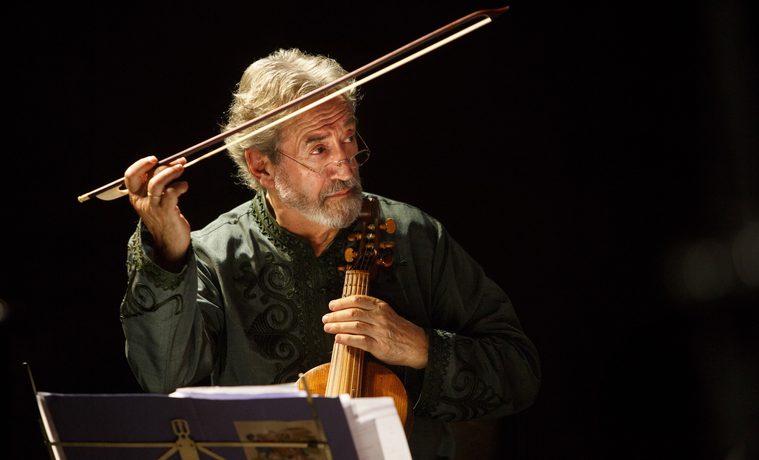
Listen to The Warm Up: your audio introduction to the performance.